
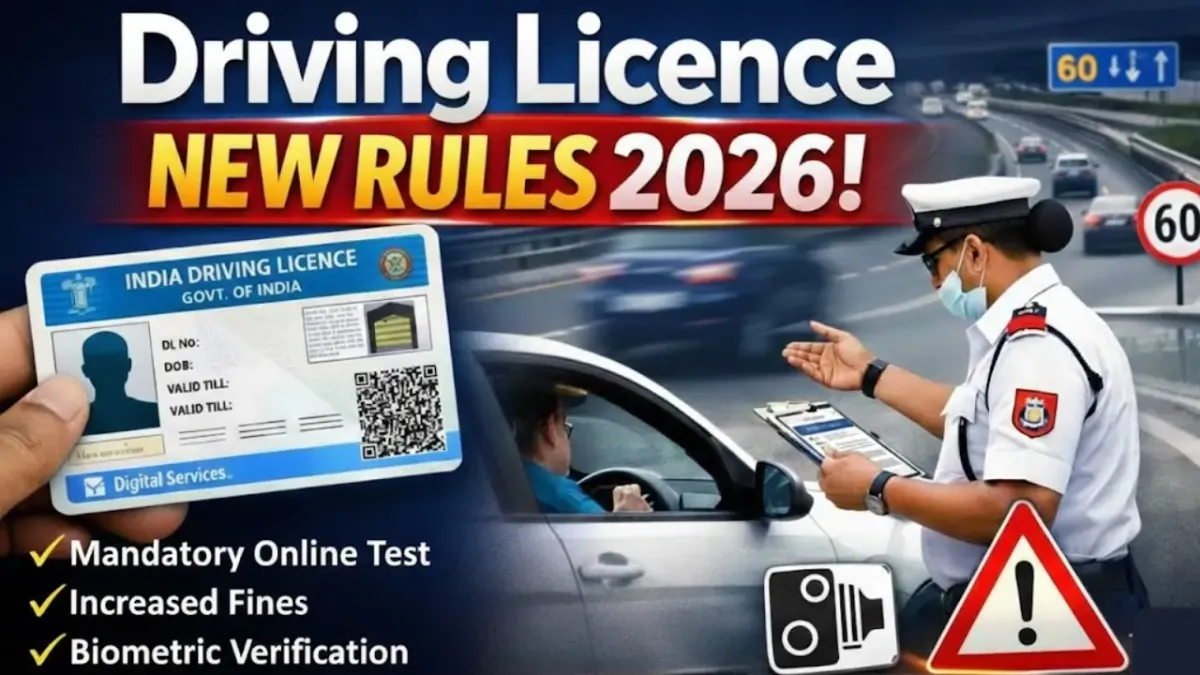
Driving Licence Rules Driving regulations in India continue to evolve to improve road safety, transparency, and efficiency. In 2026, several important updates related to driving licences have drawn public attention. These changes aim to simplify procedures, strengthen verification systems, and reduce fraud while ensuring safer roads for everyone.
The driving licence system in India operates under the supervision of the Ministry of Road Transport and Highways and is implemented through Regional Transport Offices (RTOs) across the country. Let us understand the major changes introduced or proposed in 2026 and how they affect drivers.
Digitalisation of Driving Licence Services
One of the biggest reforms in 2026 focuses on complete digital integration. Applicants can now complete most steps online, including application submission, appointment booking, fee payment, and document upload.
The government is encouraging the use of official digital platforms to reduce middlemen and speed up the process. This move increases transparency and minimizes paperwork at RTO offices.
Stricter Learner’s Licence Process
The learner’s licence process has been strengthened. Online learning modules and computer-based tests are now mandatory in many states. The test includes updated questions related to traffic rules, road signs, and safety guidelines.
Applicants must score the required passing marks before proceeding to the driving test stage. This ensures better theoretical knowledge before practical driving.
Enhanced Driving Test Standards
Driving tests have become more structured and technology-based. Many RTOs now use automated driving test tracks equipped with sensors and cameras. These systems evaluate parking skills, slope control, reverse driving, and lane discipline without human interference.
This reduces the possibility of manual bias and ensures fair assessment for all applicants.
Mandatory Aadhaar and Identity Verification
To prevent fake licences and duplicate records, stronger identity verification measures have been implemented. Aadhaar-based authentication is encouraged during application and renewal processes.
Biometric verification helps maintain a centralised database and prevents misuse of driving licences.
Stricter Penalties for Violations
Under the updated guidelines, drivers caught with fake licences or driving without valid documentation may face heavy penalties. Authorities are also strengthening traffic monitoring systems to identify repeat offenders.
The aim is to promote responsible driving behaviour and reduce road accidents across India.
Changes in Renewal Rules
The renewal process has been simplified but made more regulated. Senior citizens may require medical fitness certificates at regular intervals.
Renewal can now be completed online in many states, reducing the need for physical visits unless mandatory testing is required.
Validity and Smart Card Integration
Driving licences are increasingly being issued as smart cards linked to a national database. These smart licences contain embedded chips storing driver information securely.
Digital copies stored in government-approved mobile apps are legally valid during traffic checks.
Overview of Key Changes in 2026
| Update Area | New Rule 2026 | Impact on Drivers |
|---|---|---|
| Application Process | Mostly Online | Faster and transparent system |
| Driving Test | Automated Tracks | Fair and accurate evaluation |
| Identity Verification | Aadhaar Linked | Reduced fraud |
| Renewal Process | Simplified & Online | Convenience for citizens |
| Smart Licence | Chip-based Cards | Better data security |
Why These Changes Matter
India records a large number of road accidents every year. Strengthening the licensing process ensures that only trained and qualified drivers receive licences.
The reforms aim to create safer roads, reduce corruption, and bring uniformity in driving licence management across states.
What Drivers Should Do in 2026
Drivers should keep their documents updated, follow traffic rules strictly, and check official notifications before applying for new licences or renewals.
It is also advisable to avoid unofficial agents and rely only on authorized digital platforms or RTO offices.
Q1. Can I apply for a driving licence fully online in 2026?
Most steps can be completed online, but the driving test still requires physical presence.
Q2. Is Aadhaar mandatory for a driving licence?
Aadhaar-based verification is encouraged for identity confirmation and fraud prevention.
Q3. Are digital driving licences valid during traffic checks?
Yes, digital copies stored in approved government apps are legally accepted.
Q4. Has the driving test become harder?
The test has become more structured and technology-based to ensure fair evaluation.
Final Conclusion
The New Driving Licence Rules 2026 bring significant improvements in transparency, technology use, and safety standards. From digital applications to automated testing systems, the reforms aim to create responsible drivers and safer roads.